

Co‑Signing a Mortgage Isn’t Just a Favor

Person co-signing a mortgage agreement alongside the primary borrower, highlighting legal commitment
When you agree to co-sign a mortgage, you’re doing more than helping someone qualify for a loan—you may also be taking on legal ownership and potential tax liability. Many people overlook how co-signing a mortgage can affect their obligations under capital gains tax for co-signers, especially when co-signing and property ownership overlap. The IRS rules for co-signers on a mortgage are clear: if you’re listed on the title, you could be partially liable for capital gains on real estate co-ownership, even if you didn’t live in the home. Understanding the tax implications of co-signing a mortgage is critical to avoiding unexpected financial consequences.
Co‑Signer vs. Co‑Owner: Know the Difference
It’s important to distinguish between being a co-signer (on the loan) and a co-owner (on the title). These are not the same:
-
Co-signer only: You’re financially responsible for the loan but don’t legally own the property.
-
Co-owner: Your name is on the deed, which grants you legal ownership rights.
Only property owners are generally subject to capital gains tax, but that doesn’t mean all co-owners will owe tax—it depends on how the sale proceeds are distributed and whether any tax exemptions apply.
When Do Co‑Signers Owe Capital Gains Tax?
You may owe capital gains tax if:
-
Your name appears on the property title
-
You receive a portion of the sale proceeds
-
You do not qualify for the IRS primary residence exclusion
Even if you didn’t live in the home or make payments, being on the title can trigger tax obligations. The IRS focuses on legal ownership, not intent.
The Primary Residence Exclusion: What Co‑Signers Need to Know
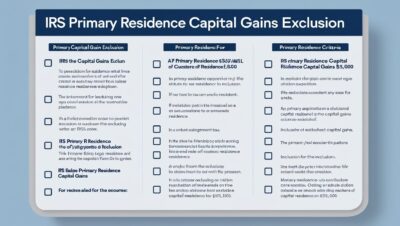
You may exclude up to:
-
$250,000 in capital gains if filing as single
-
$500,000 if married and filing jointly
To qualify, you must have:
-
Owned the home for at least two of the past five years
-
Lived in it as your primary residence for at least two of those years
If you co-signed but never lived in the property, you typically can’t claim this exclusion, even if you’re listed on the title.
Real-Life Examples: Different Scenarios Explained

Young couple and real estate agent using laptop while going through housing plan on a meeting.
Case 1: Co‑Signer Not on Title
Alex co-signed a loan for his daughter but was never added to the deed. She sold the house and kept all the proceeds.
Result: Alex had no capital gains tax liability.
Case 2: Co‑Signer On Title, Did Not Live There
Maria co-signed for her nephew and was added to the title. She didn’t live in the house or benefit financially but had to report her ownership share to the IRS.
Result: Maria faced partial tax liability.
Protecting Yourself as a Co‑Signer
Before co-signing, take steps to reduce potential tax and legal risks:
1. Clarify Your Role
Verify whether you’ll be on the loan only, the title, or both.
2. Use a Written Agreement
Clearly document your relationship to the property, including ownership, financial responsibility, and expectations about proceeds.
3. Avoid Unnecessary Title Involvement
If you’re only helping with loan qualification, you may want to stay off the deed to avoid unwanted tax consequences.
4. Keep Detailed Records
Track payments, occupancy, and agreements to help prove beneficial ownership (or lack thereof).
5. Get Legal and Tax Advice
Before any sale or property transfer, consult a real estate attorney or CPA for personalized guidance.
How Ownership Type Affects Tax Liability
Different ways of holding title influence your share of capital gains:
-
Joint Tenancy: Equal ownership; proceeds and taxes usually split equally.
-
Tenants in Common: Ownership percentages can vary; tax liability matches your share.
-
Community Property: In certain states, both spouses may be taxed jointly on the entire gain.
Summary Table: Capital Gains Tax for Co‑Signers
| Scenario | Capital Gains Tax? | IRS Exclusion Possible? |
|---|---|---|
| Co-signer on loan only, not on title | No | Not applicable |
| On title, lived in home ≥ 2 of last 5 years | Possibly | Yes |
| On title, did not live in home | Possibly | Likely no |
Final Thoughts
Being a co-signer on a mortgage doesn’t automatically mean you’ll owe capital gains tax—but if you’re also on the property title, your financial and tax responsibilities could extend further than you expected.
To avoid unexpected liabilities:
-
Understand your legal role
-
Avoid being on the title unless absolutely necessary
-
Document your involvement
-
Seek professional guidance before any sale or refinance
Ready to Protect Yourself from Unnecessary Capital Gains Tax?
Co-signing a mortgage can be a generous way to help someone buy a home but it can also expose you to unexpected tax liabilities. Don’t leave your financial future to chance.
Get expert guidance today and make sure you fully understand your role, your risks, and your rights before signing—or before the property is sold.
Additional Resources